For most organizations planning to build a Security Operations Center (SOC), the question is no longer whether to invest, but what it will take to make it operational. While many companies expect to launch an SOC within a year and to keep their budgets under control – real-world experiences differ significantly, shaped by variations in scale, maturity and strategic priorities.
As Kaspersky has highlighted previously, many organizations are planning to build a Security Operations Center (SOC) to strengthen their overall security posture. These findings, that are based Kaspersky’s comprehensive global study[1], reveal that behind seemingly similar plans, companies face very different realities when turning SOC concepts into operational capabilities.
According to the study, the average planned budget for setting up an SOC globally is around 2 million USD. However, this figure conceals significant variations in expectation levels. More than half of organizations (55%) plan budgets below 1 million USD, while around one quarter (24%) are prepared to invest more than 2.5 million USD. Planned spending also strongly correlates with company size and their level of SOC outsource, as smaller companies tend to focus on more modest investments, whereas large organizations are far more likely to plan costly SOC projects, reflecting broader infrastructure coverage and higher operational demands.
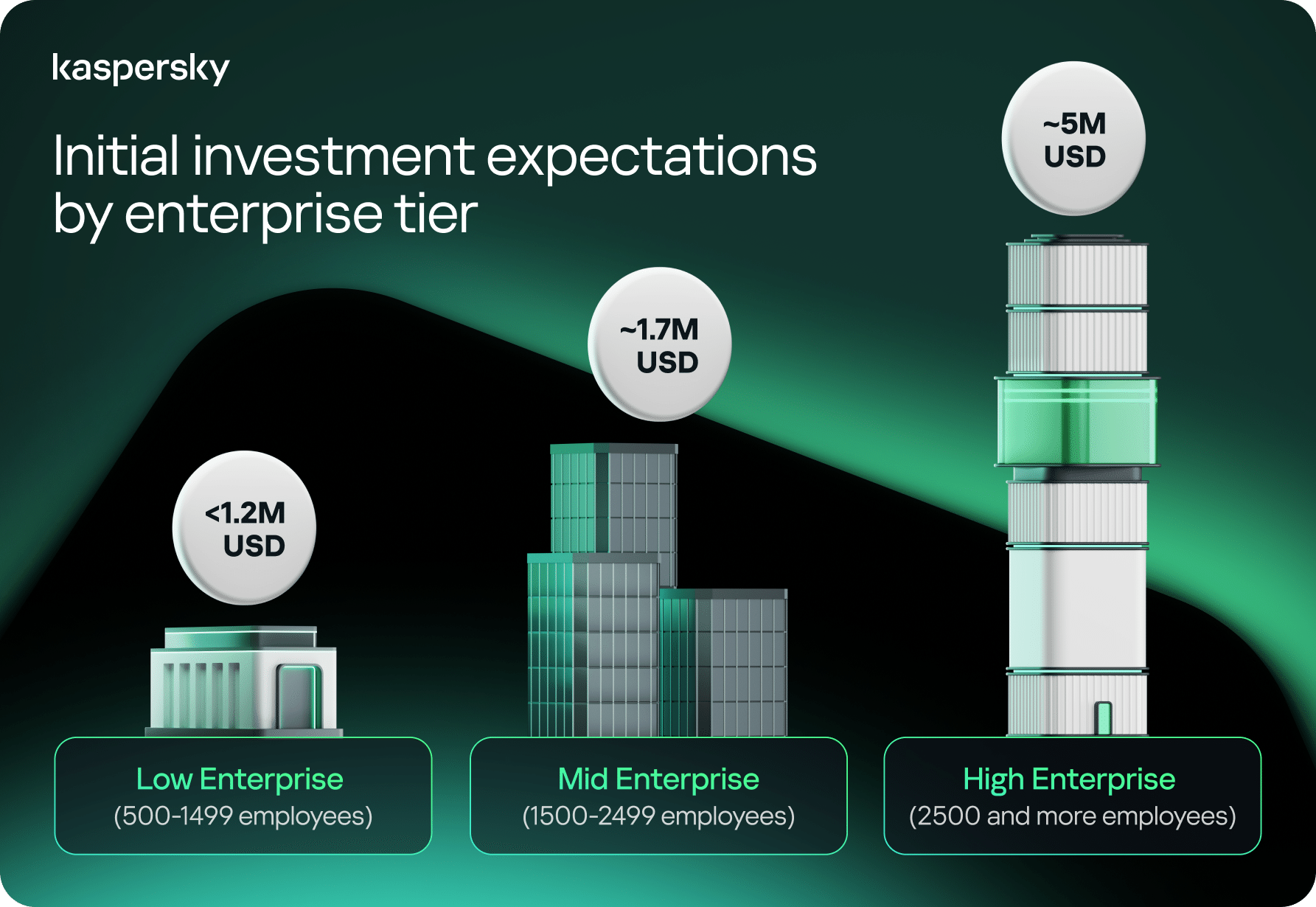
Notable state-level differences were also revealed, as organizations in countries like Vietnam and China were willing to invest more than the global market average in SOC development, whilst many other nations were not inclined to spend more than 1 million USD. The shift towards an increasing SOC budget may be explained by the companies’ strategic focus on digital sovereignty and the development of in-house security solutions within national infrastructure.
When it comes to timelines, expectations were similarly concentrated, but with notable outliers. Two thirds of companies (66%) expected to build their SOC within 6-12 months, while more than one quarter (26%) anticipated longer projects lasting up to two years. Despite operating more complex environments, large companies are more likely than mid-sized organizations to prioritize faster SOC deployment. In practice, this often means launching an SOC for critical segments first and then expanding coverage across the infrastructure in stages.
The research also highlights that building an SOC comes with a wide range of challenges rather than a single dominant obstacle. High capital costs were cited here most frequently, being mentioned by one third of respondents (33%). At the same time, many organizations struggle with evaluating SOC effectiveness (28%), as this often involves a wide range of KPIs, from financial metrics like Return on Investment (ROI) and operational benchmarks such as Mean Time to Detect (MTTD) and Mean Time to Response (MTTR), to strategic objectives like ensuring compliance with industry standards.
Additionally, companies grapple with managing complex security solutions (27%) and integrating multiple systems and technologies (26%). A quarter of companies also point to a lack of expertise, both among existing employees (25%) and in the external labor market (25%), underlining that human resources remain a critical constraint alongside technology and budgets.
“The budget required to establish a SOC can vary widely, such that any figure can be considered realistic. The initial investment primarily covers licenses and hardware, with costs heavily influenced by the scale of the infrastructure and the chosen product suite. It’s important to view this as a capital expenditure phase. Subsequently, substantial operational costs – particularly personnel salaries – will shape the overall total cost of ownership. To ensure that these investments are effective and aligned with organizational needs, it is crucial to develop a strategic plan that clearly defines objectives, processes, and milestones from the beginning. This approach helps to build a resilient cybersecurity posture," says Roman Nazarov, Head of SOC Consulting at Security Consulting Services at Kaspersky.
To successfully build and operate a reliable SOC, Kaspersky recommends the following:
- Engage with Kaspersky SOC Consulting during the initial setup or when enhancing your existing security operations. Our comprehensive consulting services are designed to help companies build a robust SOC and streamline its processes.
- Boost your security performance with Kaspersky SIEM, powered by advanced AI capabilities. This solution aggregates, analyzes and stores log data across your entire IT infrastructure, providing contextual enrichment and actionable threat intelligence insights.
- Protect your company against a wide range of threats with solutions from the Kaspersky Next product line that provide real-time protection, threat visibility and AI-driven investigation and response capabilities of EDR and XDR for organizations of any size and industry.
- Equip your cybersecurity team with in-depth visibility into cyber threats targeting your organization. The latest Kaspersky Threat Intelligence delivers rich, contextual insights throughout the entire incident management cycle, enabling timely identification of cyber risks.
- If you lack dedicated personnel to perform key SOC functions, use Kaspersky Managed Detection and Response and Kaspersky Incident Response. These services cover the entire incident management cycle – from threat identification to continuous protection and remediation. They help to protect against evasive cyberattacks, investigate incidents and get additional expertise.
To explore more of Kaspersky’s solutions
and services for building and enhancing your SOC, please follow this link.
[1] The survey was conducted by Kaspersky’s internal market research center and involved senior IT security professionals, managers, and directors from organizations with 500 or more employees, and focused on companies that do not yet have a Security Operations Center (SOC) but plan to establish one in the near future. The respondents in this study come from 16 countries, including Germany, Spain, Italy, Brazil, Mexico, Colombia, Singapore, Vietnam, China, India, Indonesia, Saudi Arabia, Turkey, Egypt, the United Arab Emirates, and Russia.


